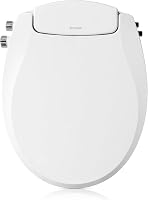
Best Bidet Seats: A Fit-First Buying Guide
The best bidet seat is one that fits your toilet and gives you the wash you want. Choose Brondell Swash Ecoseat for a manual elongated seat, TOTO WASHLET C5 for warm-water comfort and saved settings, or an attachment if you want to keep your seat.
On this page (11 sections)
- How do you choose the best bidet seat for your toilet?
- Does your toilet need a round or elongated bidet seat?
- Should you choose an electric or non-electric bidet seat?
- What features are worth comparing?
- Which bidet seat types should you compare?
- Which bidet seat fits your priorities?
- How do you check installation and water access?
- How do you use a bidet seat comfortably?
- How should you maintain a bidet seat?
- Which buying mistakes should you avoid?
- What is the best bidet seat for your bathroom?
The best bidet seat is the one that fits your toilet and delivers the wash you want. Brondell Swash Ecoseat suits a simple manual setup, while TOTO WASHLET C5 suits buyers who want warm water, seat heating and saved wash settings.
Your first decision is physical fit, followed by water temperature and control access. A remote or dryer adds little value if the seat cannot mount securely or leaves you sitting too far forward.
This guide compares 3 replacement seats and 1 attachment. Use the attachment option if you want to keep your current seat, then check the setup and care sections before ordering.
How do you choose the best bidet seat for your toilet?
Choose a bidet seat by checking fit, water temperature, controls and connections, in that order. This keeps useful features ahead of extras you may rarely use.
Work through these questions before comparing models:
- What toilet do you have? Identify the bowl shape and, if possible, the toilet model.
- Will the bidet mount correctly? Check bolt spacing, bowl length and clearance near the tank.
- What kind of wash do you want? Decide whether ambient water is acceptable or adjustable warmth is essential.
- Can everyone reach the controls? Consider grip, reach and how easy the buttons or dial are to understand.
- Can the bathroom support it? Check the water connection, hose route and outlet requirements.
- Which extras solve a daily need? Seat warmth, drying and saved settings should earn their place in your decision.
Make a best bidet seat shortlist with 3 must-haves
Write down 3 needs you will not compromise on, such as elongated fit, warm water and reachable controls. Compare only models that meet those needs before considering a night light or extra spray modes.
For an unheated guest bathroom, a simple manual wash may be enough. For your main bathroom, comfort during every visit may justify a powered seat and the setup it requires.
Think about everyone who will use the toilet, including visitors. A feature-rich seat still needs clear controls and an obvious way to stop the water.
Our guide to choosing a bidet seat helps you turn those priorities into a shortlist.
Does your toilet need a round or elongated bidet seat?
Your replacement bidet seat must match the bowl shape and mounting area. Overall seat dimensions alone cannot confirm compatibility.
Measure from the center of the seat-mounting holes to the front of the bowl. Also measure the distance between those holes and the clearance from them to the tank or raised porcelain behind the seat.
Check whether you can reach the mounting nuts beneath the toilet. Some toilets hide the bolts or water connection behind a skirt, which can change the hardware or access needed.
The Brondell Swash Ecoseat and TOTO WASHLET C5 covered here both fit elongated toilets. Their overall dimensions are 20.03 x 14.39 in and 20.88 x 15.06 in, respectively.
Those measurements describe the seat bodies, not the required bolt spacing or usable sitting area. Compare the installation diagram with your toilet rather than matching length alone.
A bulky rear housing can reduce how far back you can sit. Look at the opening and hinge position, especially if your current toilet already feels short.
For a round bowl, start with our round toilet bidet seat guide. The elongated versus round seat guide explains the measurements if you are unsure which shape you have.
Check nearby fixtures too. A vanity, wall or toilet-paper holder may leave enough room for the seat but interfere with a side control or your hand.
Should you choose an electric or non-electric bidet seat?
Choose electric for powered comfort features and non-electric for a simpler manual wash. Make water temperature your first dividing line, then check whether the bathroom can support your choice.
When electric makes sense
An electric seat suits you if a cold seat or cool wash would discourage regular use. It also makes sense when a remote or air dryer addresses a specific comfort or reach concern.
Allow time for the full routine. Warm air drying is an option for reducing paper use, but it is not an instant step.
Warm-water systems vary across electric seats. If long washes or several users in succession matter, check how the exact model heats and replenishes water before choosing.
Do not assume that every electric seat supplies unlimited warm water. Features such as a heated seat, remote and dryer do not establish the water-heating method.
When non-electric makes sense
A non-electric model suits you if you want water cleansing without arranging an outlet. It is also a sensible choice when you prefer turning a dial to managing several settings.
Ambient water follows the temperature of the incoming supply. Think about winter conditions in your home rather than judging comfort from the bathroom’s air temperature.
A short wash may feel quite different from a longer one. If you already dislike cool water against your skin, choose adjustable warmth instead of hoping you will get used to it.
Read our electric or non-electric bidet seat comparison for the trade-offs. Our guide to which bidet seats need electricity covers the power question in more detail.
What features are worth comparing?
Prioritize a controllable wash and easy operation before adding comfort extras. Pressure adjustment, spray aim and control placement affect the part of the routine you will use most.
| Feature | Why it matters | What to decide |
|---|---|---|
| Adjustable pressure | Lets you begin gently and increase the stream as needed | Can you make small changes easily? |
| Spray aim and wash modes | Help direct water where you need it | Do you need front wash, rear wash or both? |
| Water temperature | Affects comfort, especially in colder months | Is ambient water acceptable? |
| Control placement | Affects reach and ease of use | Would a dial, side panel or remote suit you? |
| Heated seat | Adds comfort before the wash begins | Would you use it throughout the year? |
| Air dryer | Provides a drying option after washing | Are you willing to wait for it? |
| Saved settings | Reduces repeated adjustments in a shared bathroom | Do users prefer different wash settings? |
| Nozzle cleaning | Automates part of nozzle care | Can you also reach it for routine cleaning? |
Pressure is not a contest. A gentle, well-aimed stream is a better starting point than turning the control high and shifting around to escape it.
Front wash and rear wash are useful distinctions if several people share the toilet. Decide which functions each person needs rather than treating more spray modes as an automatic advantage.
A remote can be easier to see and hold than controls beside your hip. It still needs an accessible storage spot, and users need to understand the stop control.
For someone with limited reach or hand movement, consider the whole routine: sitting, starting the wash, adjusting it and drying. Our bidet seats for seniors guide focuses on those practical needs.
Which bidet seat types should you compare?
Compare replacement seats and attachments separately, because they change the toilet in different ways. A replacement removes your current seat; an attachment adds a wash system beneath it.
Replacement bidet seats
Choose a replacement seat if you want a new sitting surface or features built into the seat. This format includes both manual and electric options.
Check the new seat’s opening, rear housing and lid use. Do not assume you can sit on a closed lid unless the manufacturer permits it.
A replacement also means evaluating the new seat’s comfort rather than keeping a shape you already like. Fit includes how you sit, not just whether the bolts line up.
Our guide to how to install a bidet seat explains the mounting and connection steps.
Attachments
Choose an attachment if you like your existing seat and mainly want to add a wash. Check that the attachment can sit beneath it without causing rocking or uneven support.
Look at where the seat’s bumpers contact the bowl after installation. If added clearance is needed, use only a support arrangement allowed by the seat and attachment instructions.
An attachment is not a solution for an already loose or damaged seat. Fix that problem first so the finished setup has a stable base.
Compare both formats in our bidet seat versus attachment guide. For the mounting details, use the bidet attachment installation guide.
Which bidet seat fits your priorities?
Choose Brondell for a manual replacement, TOTO for saved powered settings, Tushy for keeping your seat, or KERDE for two control locations. The best match depends on which part of your routine you want to improve.
Brondell Swash Ecoseat: a manual elongated replacement
Best for outlet-free bathrooms. Score: 9.1.
The Brondell Swash Ecoseat suits an elongated toilet where you want a complete replacement seat without electricity or batteries. Its manual dial keeps the daily routine focused on choosing the wash and adjusting pressure.
The dual-nozzle system provides rear and front washes with ambient-temperature water. A gentle-closing seat and a lid designed for sitting add useful seat features without powered controls.
This is a good match for a household that wants water cleansing but has no need for heat or drying. It also avoids making an electrical upgrade part of the bathroom project.
Brondell includes a mounting plate, mounting hardware, bidet hose and manual. Before starting, confirm the water fitting and mounting access rather than assuming the included parts fit every toilet.
Skip it if warm water is essential or the manual dial is awkward to reach. An elongated fit also rules it out as a direct choice for a round bowl.
Check whether the dial will be comfortable for each regular user. A simple control helps only when you can reach and turn it without twisting awkwardly.
TOTO WASHLET C5: comfort with saved wash settings
Best for shared wash preferences. Score: 8.9.
The TOTO WASHLET C5 suits an elongated toilet shared by people who want different wash settings. Its wireless remote stores 2 users’ preferences, reducing the adjustments needed between visits.
The wash includes soft rear, rear and front cleansing, with oscillating or pulsating options. Adjustable water temperature and pressure let users tailor the stream rather than share one fixed setting.
The heated SoftClose seat and warm air dryer each have 5 temperature settings. An air deodorizer adds another bathroom comfort feature.
PREMIST wets the bowl before use to help prevent waste from sticking. EWATER+ automatically cleans the wand inside and out before and after use.
Those cleaning functions support routine care, but the seat, hinges and surrounding bowl still need attention. Choose the C5 for its wash and comfort package rather than expecting a maintenance-free toilet.
Skip it if you want only a basic water wash or cannot provide suitable power. It is also the wrong shape for a round toilet.
Plan a remote location that every user can reach from a seated position. Avoid putting it somewhere that requires standing or leaning across the toilet to stop or change the wash.
Tushy Classic 3.0: an attachment for your current seat
Best for keeping your seat. Score: 8.7.
Tushy Classic 3.0 suits you if your current seat is comfortable and you want to add manual water cleansing. It fits between the bowl and seat rather than replacing the sitting surface.
This non-electric attachment uses cool water, with pressure control and a precision nozzle adjuster. The control sits on the right, so check clearance and your ability to reach that side.
TUSHY’s SmartSpray nozzle rinses before and after use and retracts when the attachment is turned off. Adjustable seat fasteners help position the attachment during mounting.
This is a practical choice when heat and drying are low priorities. Keeping your seat can also avoid changing a sitting shape you already find comfortable.
Skip it if you want a heated seat or powered drying, or if your existing seat cannot rest securely over the attachment. Adjustable mounting does not remove the need to check support and clearance.
After installation, make sure the seat does not rock under normal use. Correct the fit according to the instructions before using the wash.
KERDE P30B: a choice of side panel or remote
Best for mixed control preferences. Score: 8.2.
The KERDE P30B suits a household where some users prefer fixed controls and others prefer a remote. It provides a full-function side panel alongside a wireless remote.
The wash has adjustable water temperature and pressure, plus a self-cleaning stainless steel nozzle. A heated seat, warm air dryer, quiet-close lid and LED night light round out the comfort features.
Two control locations are useful when users differ in reach or habit. They also let you decide which control is easiest to use while seated rather than choosing one format for everyone.
KERDE specifies a 120 V, 3-hole outlet and a 45 in cord. Measure the actual cord route, including bends around the toilet, rather than the straight-line distance to the outlet.
Skip it if the outlet is out of reach or the side panel crowds your bathroom. The seat measures 20 x 17 in overall, so check the mounting diagram and surrounding space carefully.
Choose it for the control arrangement if that solves a real household need. If everyone prefers a simple dial, its powered functions add decisions and setup requirements you may not want.
How do you check installation and water access?
Confirm mounting access, compatible water fittings and any required outlet before removing the old seat. Reading the instructions first can reveal a connection problem while your toilet is still usable.
Start by locating the toilet’s shutoff valve. If it is stuck, corroded or will not stop the flow, resolve that before disconnecting anything.
Most installations involve a branch connection to the toilet’s supply, but fittings and connection points vary. Follow the bidet’s instructions rather than assuming a video for another model uses the same parts.
Prepare a towel and a shallow container for water left in the hose or tank. Keep the removed seat and hardware together until the new setup is complete.
Use this installation order as a planning checklist:
- Shut off the water and follow the instructions for draining the connection.
- Remove the old seat and clean the mounting area.
- Fit the mounting plate or attachment, keeping it loose enough for alignment.
- Check position and support before final tightening.
- Connect the water fittings without twisting or kinking the hose.
- Restore water slowly and inspect each connection.
- Connect power when directed and check the wash functions according to the manual.
Start threaded fittings straight and tighten them as instructed. Forcing a crooked connection or overtightening plastic parts can create damage rather than a better seal.
Do not add thread tape automatically. Some connections seal with a washer, so use the sealing method specified for that fitting.
For a powered seat, follow the grounding and GFCI requirements in its instructions and local electrical rules. Have an electrician handle a missing or unsuitable outlet instead of improvising a cord route.
Check connections again after the first few uses. A dry tissue held against a fitting can help reveal a small seep that is hard to see on a shiny surface.
Our guide to adding a bidet to an existing toilet covers compatibility questions. Keep the bidet seat installation guide nearby for a more detailed walkthrough.
How do you use a bidet seat comfortably?
Start with low pressure, correct positioning and a short wash, then adjust gradually. More force is not the first fix for a stream that misses its target.
Sit fully on the seat before starting the wash. Find the stop control first, especially when using an unfamiliar remote or panel.
Increase pressure in small steps. If the stream feels uncomfortable, stop and reduce it rather than continuing at the same setting.
Adjust the nozzle position or your sitting position before adding force. A small change can direct the stream more effectively than a large pressure increase.
Use warm settings conservatively at first. Comfort varies between people, so a shared bathroom should not assume one person’s preferred temperature suits everyone.
Allow water to drain into the bowl before drying. Pat dry with a small amount of paper, or use the dryer if your seat includes one.
Do not expect the air dryer to work like a quick wipe. Leave time for drying, and keep paper available while you learn the routine.
For guests, a brief explanation of start, stop and pressure is more useful than a tour of every feature. Keep the remote in a predictable place and leave manual controls fully off after use.
How should you maintain a bidet seat?
Clean the seat, nozzle and surrounding mounting area as directed by the manufacturer. An automatic nozzle rinse does not clean every surface you touch or every place where moisture collects.
Use the approved cleaner on a soft cloth. Avoid spraying liquid into control panels, electrical openings or seams.
Do not force a nozzle outward for cleaning. Use the model’s cleaning position or nozzle-care procedure so you do not damage the mechanism.
Pay attention to the underside of the seat and the area around the mounting plate. If the seat has a removal feature, use it only as described in the instructions.
Follow the manual for any inlet screen or filter maintenance. Reduced flow is a reason to check the supply and approved maintenance steps before turning pressure higher.
Inspect the hose and connections during routine cleaning. Look for dampness, rubbing, sharp bends or a seat that has started to move.
If water appears around the toilet, identify the source before assuming it is splash. Shut off the water if a connection continues to leak.
Use our bidet nozzle cleaning guide for care steps. Our guide to checking a leaking bidet seat helps you narrow down where water is escaping.
Which buying mistakes should you avoid?
Avoid choosing features before checking fit and daily use. Most preventable mistakes come from assuming a bidet will work like the seat already on the toilet.
- Ordering by bowl shape alone. The rear housing, mounting holes and side clearance also need to fit.
- Overlooking the sitting area. A seat that mounts correctly can still leave less room than you prefer.
- Assuming an attachment preserves seat support. Check that the seat rests evenly after the attachment is beneath it.
- Choosing controls for appearance. Reach and readable labels matter more during use.
- Expecting cool water to feel warm indoors. Incoming supply temperature determines a manual wash.
- Assuming a dryer removes all waiting. Plan for a longer drying step or keep paper available.
- Using installation speed as the deciding factor. Accessible bolts and compatible fittings matter more than a promised number of minutes.
- Ignoring closed-lid use. A quiet-close lid is not automatically designed to support someone sitting on it.
If a feature is essential, confirm it for the exact model and version you plan to order. Similar names and shapes do not guarantee identical controls, fit or functions.
Keep your measurements and must-have list together while comparing. This makes it easier to reject an unsuitable seat even when its extra features look appealing.
What is the best bidet seat for your bathroom?
Pick the best bidet seat for the routine you want to keep. Use fit as the entry requirement, then make the final choice around temperature, controls and how you prefer to dry.
Choose Brondell Swash Ecoseat if you want a manual elongated replacement and are comfortable with ambient water. Choose Tushy Classic 3.0 if you want to keep a compatible existing seat and add a cool-water wash.
Pick TOTO WASHLET C5 when saved settings and powered comfort suit your shared bathroom. Choose KERDE P30B when having both a side panel and a remote is the feature that makes operation easier.
Before ordering, take one final look at the mounting diagram, water connection and control clearance. For powered models, measure the cord route to the required outlet as carefully as the bowl.
If bowl shape is still the unresolved step, use our guides to round toilet bidet seats and elongated toilet bidet seats to narrow the options that can fit.
Frequently asked questions
How do I choose the best bidet seat?
Choose by toilet fit first, then water temperature, controls and power access. Measure the bowl, bolt spacing and clearance behind the mounting holes before comparing features.
Decide which functions you need each day, then rule out seats that cannot connect safely or leave enough room to sit comfortably.
Do bidet seats fit both round and elongated toilets?
Replacement bidet seats need to match the toilet’s bowl shape and mounting requirements. The Brondell Swash Ecoseat and TOTO WASHLET C5 here fit elongated toilets.
An attachment may allow more mounting adjustment, but you still need to check bolt access, tank clearance and support beneath your existing seat.
Do all bidet seats need electricity?
No, non-electric seats and attachments can wash using the household water supply without an outlet. The Brondell Swash Ecoseat and Tushy Classic 3.0 are manual options.
Electric models use power for features such as seat heating and drying, so check the required outlet and cord reach before buying.
Is a bidet seat better than an attachment?
A replacement seat is better when you want to replace the seat itself or add built-in comfort features. An attachment makes more sense when you like your current seat and want a simpler water wash.
Check fit carefully, since an attachment can change how the seat rests on the bowl.
Can I install a bidet seat myself?
You can often install a bidet seat yourself if the toilet has accessible mounting bolts, compatible water fittings and any required electrical outlet. Read the model’s instructions before starting and locate the shutoff valve.
Stop if the valve will not close, fittings are damaged or the connection requires plumbing changes.
Will a bidet seat replace toilet paper completely?
A bidet seat can reduce wiping, but you may still want toilet paper for drying or checking that the wash is complete. A warm air dryer offers another drying option, though it takes time.
Start with a gentle wash, adjust your position and pat dry rather than rubbing.